


Products
Gas Freeing Fans & Equipment
Deep-penetration gas freeing fans in water, air, steam and hydraulic driven versions, for faster, safer tank entry.
Why gas freeing matters
A critical safety step before tank entry
Gas build-up in confined spaces such as cargo tanks, sumps and drains can be a major risk to life. A cargo tank should not be entered unless the oxygen content is 21% and the hydrocarbon vapour content is below 1% of the lower flammable limit. If the previous cargo contained hydrogen sulphide or other toxic contaminants, the tank should also be checked for those gases.
The fastest way to gas free is a deep-penetration, high-volume fan blowing air into the tank. Every Dasic Jetfan is of this design, directing air as a column to the tank bottom to displace the gaseous atmosphere more effectively.

The range
The Jetfan range
Water, air, steam and hydraulic driven fans for everything from VLCCs to small tonnage vessels with limited deck space.
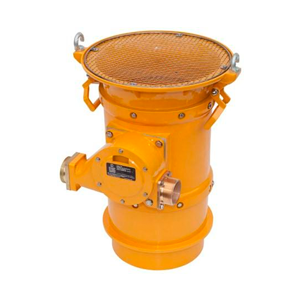
Jetfan 125 Water Driven
Water-driven deep-penetration gas freeing fan for large tankers and FPSOs.
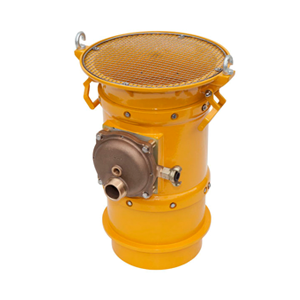
Jetfan 85 Air Driven
Air-driven version of the Jetfan 125.
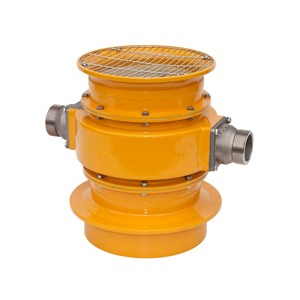
Jetfan 70 Water Driven
Compact water-driven Mark III gas freeing fan.
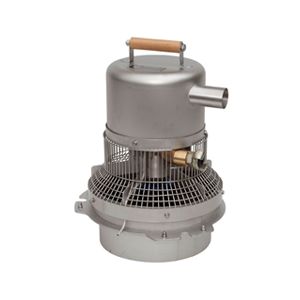
Jetfan 65 Air Driven
Lightweight stainless steel fan in air, steam or hydraulic drive.
Built for the job
Designed with safety in mind
No water in the cargo tank
On our water-driven Jetfans the Pelton wheel and water drive sit outside the fan casing and the airflow, so a drive-water leak stays outside the tank.
Penetration or extraction
Normally used to blow air in, Jetfans can be switched to extraction. Conversion kits are available for the Jetfan 65.
For cold climates
Steam and hydraulic driven versions suit vessels operating in sub-zero and ice conditions.
Complete scope of supply
Fans are supplied with hoses, flexible ducting and a maintenance tool set with spares, plus a trolley on the larger models.
Proven on board
Case study: Stena chemical tankers
Chemical tankers can wait up to 24 hours for cargo tanks to dry after cleaning. Our Sales Manager, a former chemical tanker superintendent, recommended a Jetfan 65 package for Stena’s fleet.
01
The problem
Long cargo tank drying times after cleaning were delaying turnarounds.
02
The solution
Jetfan 65 air-driven fans with 1″ air hoses and 300 mm flexible ducting.
03
The scope
Supplied to 13 Stena chemical tankers trading worldwide.
04
The result
Cargo tank drying time cut by half, for faster turnarounds.
Complete the set-up
Gas freeing ancillaries
Hoses, ducting and couplings matched to every Jetfan.
Flexible Ducting
PVC-coated nylon ducting with a steel spiral and full earthing.
Layflat & Rigid Hose
Anti-static supply and exhaust hose for fans and tank washing.
Couplings & Adaptors
Camlock, Nakajima, Machino, Storz, Butterworth and BS336.
FAQ
Frequently asked questions
Can’t find your answer? Our engineers are happy to help.
Which Jetfan do I need?
It depends on your drive media (water, air, steam or hydraulic), the tank depth and the deck space available. The Jetfan 125 and 85 suit large tankers and FPSOs, while the Jetfan 70, 65 and 50 suit smaller vessels. Tell us your vessel and we’ll recommend one.
Can the fans be used ashore?
Yes. Our stainless steel, non-sparking fans can be used to ventilate confined spaces such as tanks, sumps and drains in hazardous atmospheres like chemical plants and refineries.
Can a fan blow and extract?
Yes. Jetfans are normally used to blow air into the tank and can be switched to extraction.